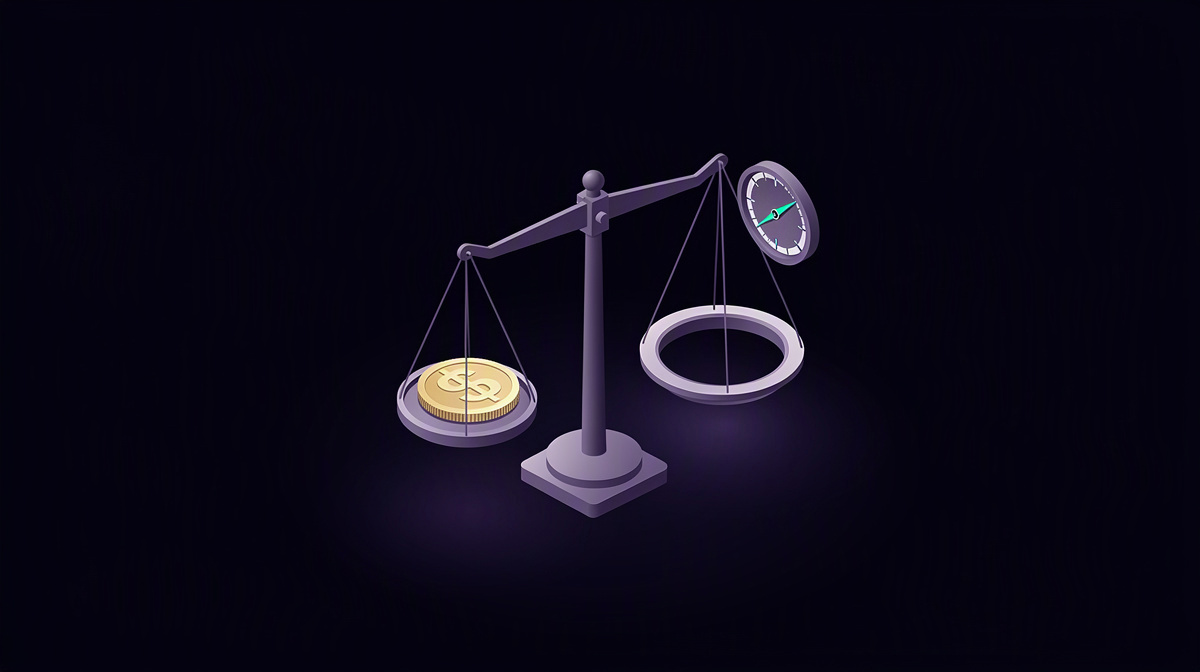
Cash and carry usually means buying an asset in spot and selling futures against it in the same size to focus on the pricing gap between the two markets. This guide is for traders searching “cash and carry” because they know spot and now want the derivatives version in plain English for positions held hours or days. It also helps to know related ideas such as carry trade meaning, market orders, counterparty risk, short squeezes, cost basis, liquidity sweeps, and the bid-ask spread.
What cash and carry means
In the classic sense, cash and carry starts with spot, which is the market where the asset itself is bought or sold for immediate ownership, and futures, where a futures contract is a derivative whose value tracks an underlying market without requiring ownership of the asset itself.
The basic structure is simple: a trader buys the asset in spot and sells a futures contract on the same asset in matched size. If the hedge is sized correctly, gains and losses from the asset’s price direction largely offset each other, so the trade depends more on the gap between the two markets than on guessing whether price will rise or fall.
That gap is called the basis: basis is the difference between the futures price and the spot price. If the futures price is above the spot price, the trader is trying to capture that premium as it narrows or disappears.
In traditional dated futures, expiry is the event that often pulls futures and spot back toward each other. That is why the trade is described as cash and carry: the trader holds, or “carries,” the spot asset until settlement while maintaining the opposite position in futures.
In crypto, people also use the phrase more loosely. They may mean any hedged structure that tries to earn from pricing differences rather than from a directional market call.
If you want to connect those ideas to perpetuals in a demo environment, you can inspect the play-money terminal, browse the perpetual market list, review open positions and margin, check funding payments, and compare the structure with broader thinking about risk and reward.
How perpetual futures change the idea
A perpetual future is a futures contract without expiry, so there is no fixed settlement date that mechanically closes the gap between futures and spot. That changes the logic of cash and carry. In a dated future, a trader can look toward expiry as the point where the contract and the underlying market may pull together. In a perpetual, that built-in endpoint does not exist.
Instead, traders focus on funding: funding is a periodic payment exchanged between longs and shorts to help keep the perpetual price near the underlying market. At a positive funding rate longs pay shorts, and at a negative funding rate shorts pay longs.
This matters because a cash-and-carry style position in perpetuals is often judged less by expiry convergence and more by the stream of funding payments over time. The common crypto version is usually long spot and short perpetual when funding is positive, because the short side receives funding. If funding turns negative, the economics can reverse.
That still does not make the structure risk-free. A hedge only works as intended if both legs stay aligned in size, the entries and exits are handled cleanly, and the trader accounts for spreads, timing, and other trading costs. If one side is larger than the other, or one leg is adjusted later than the other, directional exposure can creep back in.
Another practical difference is the mark price: mark price is the reference price used by the platform to calculate unrealized profit and loss and liquidation conditions. Even when a trader is thinking in terms of carry, the perpetual leg is still marked continuously, so margin pressure can matter before the broader idea has time to play out.
For traders who hold positions for hours or days, holding period matters a lot. The longer the trade stays open, the more funding settlements, execution frictions, and small mismatches can add up.
The mechanics: sizing, leverage, and liquidation
A cash-and-carry style idea can still break down if the perpetual leg is sized poorly or margined too tightly. The main moving parts are position size, leverage, margin, and the liquidation rule.
Leverage lets a trader control a larger position value with a smaller amount of margin. Isolated margin means only the margin assigned to that position is at risk of liquidation for that position.
The starting calculation is straightforward: initial margin equals position value divided by leverage. For example, a 10,000 USDT position at 10x leverage requires 1,000 USDT of initial margin.
That math gives a useful intuition about pressure from an adverse move:
- At 10x leverage, a 10% adverse price move uses up the initial margin.
- At 100x leverage, a 1% adverse price move does.
- At 2x leverage, a 50% adverse price move does.
This is why high leverage can make even a hedge harder to hold for hours or days. Small mismatches, basis moves, or delayed execution can matter much more when the margin buffer is thin.
Another term to track is unrealized PnL: unrealized PnL is the profit or loss on an open position based on the current mark price rather than a closed trade. On the perpetual side, that value changes as the mark price changes.
The liquidation threshold is not zero. Maintenance margin is 0.5% of the position value at the mark price. Liquidation happens when margin plus unrealized PnL falls to the maintenance margin level.
So even if a trader thinks of the trade as hedged at the portfolio level, the perpetual leg can still be liquidated on its own if its margin becomes insufficient.
For traders learning the mechanics in ZK Futures, the same ideas apply with play money: the terminal shows entry price, mark price, unrealized PnL, margin ratio, and liquidation price, which makes the margin logic easier to see before real funds are ever involved.
The costs and risks traders often underestimate
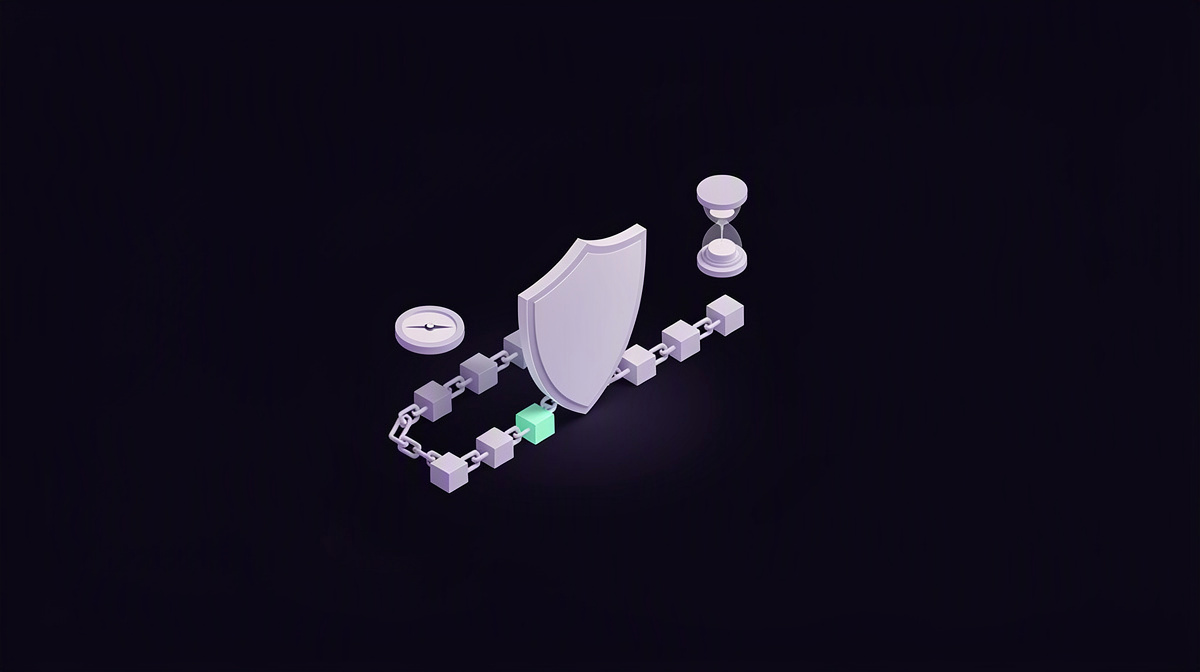
Cash and carry in crypto usually means holding spot on one side and a futures position on the other, with the goal of leaning on the price gap between them instead of a simple up-or-down market view. For traders who search for “cash and carry,” the important point is that the structure can reduce directional exposure, but it does not remove risk.
A frequent blind spot is the financing of the spot leg. If the asset was bought with borrowed funds or tied up capital, that carrying cost changes the outcome. Even without formal borrowing, capital committed to spot cannot be used elsewhere, so the trade has an opportunity cost.
There is also transfer and inventory friction. The asset may sit in one venue or wallet context while the perpetual sits in another system, and rebalancing may take time. If the hedge ratio drifts because the spot amount and the perpetual size no longer match closely, the position can stop behaving like a carry trade and start behaving like a partial market bet.
Traders holding for hours or days should also watch operational risk:
- funding can flip sign during the holding period
- re-hedging may be needed after partial fills or partial exits
- a margin buffer that looked comfortable at entry can shrink quickly
- liquidation on the perpetual leg can happen before the full two-leg idea is closed
In a demo environment such as ZK Futures, those mechanics can be studied with play money. Funding is settled every 30 seconds in the demo, and each payment appears in funding history, which helps make the running cost visible. The lesson is simple: cash and carry is a structure to manage carefully, not a mechanically safe position.
How to test the idea with play money
Use a demo to practice the moving parts of cash and carry without treating it as a trade idea. The goal here is to observe how the perpetual leg behaves over time: entries, mark-price changes, funding, and liquidation distance.
ZK Futures is a testnet demo of a hybrid crypto exchange for perpetual futures. Every balance is play money, and a new account starts with 1,205.50 test USDT. You can trade as a guest or sign in with a crypto wallet through Sign-In with Ethereum, where the wallet signs a login message and no transaction is required.
A simple study routine is to watch:
- BTC, ETH, SOL, DOGE, and PEPE perpetuals quoted in USDT
- leverage from 1x to 100x with isolated margin
- the ten-level order book on both sides
- entry price, mark price, unrealized PnL, margin ratio, and liquidation price
- funding entries, which are settled every 30 seconds in the demo
Keep position size small, leave margin room, and focus on understanding liquidation risk.
Questions traders ask about cash and carry
Is cash and carry market-neutral?
It aims to reduce directional exposure by pairing spot with an opposite futures position of similar size. But “market-neutral” is not the same as risk-free. The trade can still be affected by basis changes, uneven sizing, weak fills, and the cost of keeping both legs open.
What matters most if I hold it for hours or days?
Time changes the trade. Over a longer hold, small frictions can become the whole result:
- funding payments can add up or reverse
- spreads and slippage can matter twice, at entry and exit
- one leg may fill before the other
- the hedge ratio can drift
- margin pressure can build on the perpetual side
For this kind of holding period, the main question is not only where the trade starts, but whether it stays balanced.
Why do traders watch the mark price instead of only the last trade?
The mark price is the reference price used to calculate unrealized PnL and liquidation conditions. A perpetual position can come under stress because of the mark price even if the latest trade price looks less dramatic. That is why traders who think in carry terms still monitor margin ratio and liquidation distance closely.
How can I study the perpetual side without real funds?
One way is to use ZK Futures as a testnet demo. Every balance there is play money, and a new account starts with 1,205.50 test USDT. Funding is settled every 30 seconds in the demo, leverage runs from 1x to 100x with isolated margin, and the order book shows ten price levels on each side. That makes it easier to observe how funding, margin, and liquidation interact before any real-money decision elsewhere.
Cash and carry is simple in theory, strict in practice
What makes cash and carry hard is not the definition. It is the discipline of running two linked positions without letting timing, sizing, or margin drift break the hedge.
For positions held hours or days, keep checking:
- whether both legs still match
- whether funding is helping or hurting
- how close the perpetual leg is to liquidation
- whether exits can be made cleanly
To rehearse that process, ZK Futures lets you study perpetual mechanics with play money. It is a testnet demo, and each new account starts with 1,205.50 test USDT.